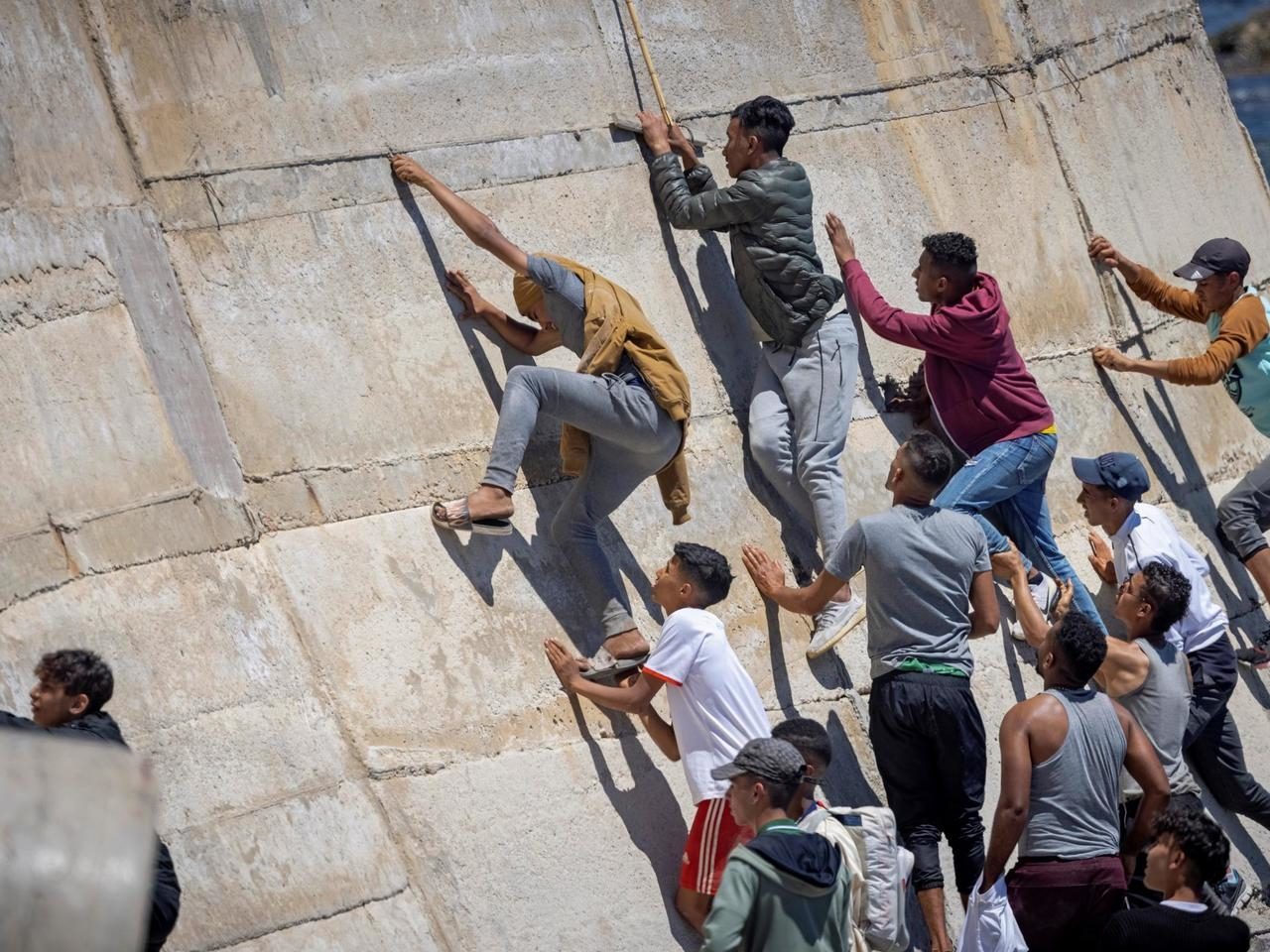
Reminiscent of several similar attempts from boys in the ancient Nigerian city of Benin, Moroccan secondary school student Mohamed, 17, dropped everything — his studies, his final exams, even his family — to try to reach the Spanish enclave of Ceuta.
And sadly, he is only one of the countless other youngsters who see no future for themselves in the country, and in Africa, as a whole.
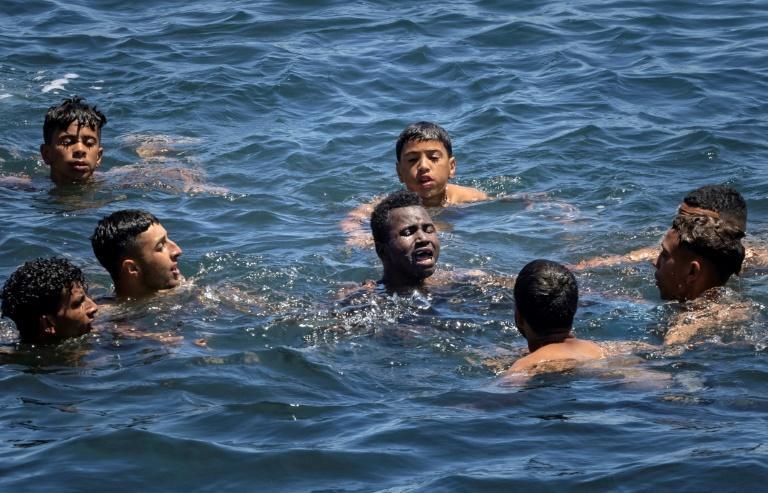
Since Monday, 17th May 2021, more than 8,000 would-be migrants, many of them unaccompanied minors (teenagers), have managed to scramble, wade or swim across the border to Spain in search of a better life in Europe.
Most have been sent straight back by the Spanish authorities, who have been angered by the blind eye turned by Moroccan border guards as the youngsters streamed across to the tiny enclave of 84,000 people.
But with already limited job prospects for school leavers greatly reduced by the Covid pandemic, many of the young returnees are determined to try again, and there are thousands more eager to follow in their footsteps.
Youth unemployment in Moroccan cities reached 40 percent last year, according to official figures, and many young people barely get by doing odd jobs.
Abdellah, 16, was sent back to Morocco by the Spanish authorities on Tuesday.
“My mother hasn’t stopped ringing me to beg me to return home, but adventure holds no fear for me,” he said.
The teenager, who said he dropped out of school two years ago and has been getting by working in a mechanic’s workshop in Tangier, said he has enough money to stay a few more days in the Moroccan border town of Fnideq and intends to try his luck again getting across.
His friend Hassan, 17, said he had decided to go home to Tangiers for now. He still dreams of living in Europe but doesn’t want to take the risk of setting off right away.
“One day, I’ll try my luck again and I’ll make it.”
Others travelled to Fnideq from further afield after hearing news of this week’s mass crossing.
Arriving in the border town on Wednesday after a long journey on foot, Mohammed said:
“I have no future here. I want to work to help my family.”
As Spain pressed on with its mass repatriations, anxious parents gathered on the Moroccan side of the border desperate for news of their loved ones.
“I’m looking for my 15-year-old daughter,” said a visibly worried Abdelhak Bouchahtaoui.
“Another girl said she saw her in Ceuta but I have no news and nobody knows anything.”
Another woman who gave her name only as Ouafa acknowledged that at first she wanted her 15-year-old son to succeed in reaching Ceuta. But in the end she had been “relieved” to be reunited with him after rushing to the border from the port city of Tangier.
Human rights activist Omar Naji said the striking number of teenagers among the would-be migrants was a first, and was deeply critical of the treatment of the youths by both the Spanish and Moroccan governments.
“Their expulsion by Spain runs contrary to international treaties on the rights of the child,” he said.
“The Moroccan authorities used them to put pressure on Spain for political purposes.”
Be all of that as it may, however, the elephant in the room remains the lack of prospects for profitable employment for school leavers that is becoming increasingly “normal” in Morocco, and indeed, across Africa.
And as this story proves, this lack of prospects is one big reason why children and teenagers often lose or struggle to retain interest in education. For many, for as long as they remain in their immediate environments, the realities in these societies constantly give them reasons to doubt that education will deliver on its promise of securing their futures. And so they focus first on escaping to Europe, the dangers notwithstanding.
The onus therefore lies on African governments, and African educators, to increase the prospects for gainful employment for school leavers, and to help African pupils and students realize education’s ability to pull them and their families out of poverty despite their societies’ probable slow growth, and even position them to help others out of poverty too.
