
Blog post

Preventing Teenage Suicide

A father draws from his son’s suicide to help other parents and caregivers understand how to support struggling teens.

Until 2018, Jason Reid believed that he could handle whatever challenges life tossed his way. After all, he was a CEO who coached other CEOs, ran another lucrative business, had a black belt in karate, and participated in Iron Man competitions.

For years, he’d seen himself as a “fixer,” the guy people came to with their problems, knowing that they’d find a receptive ear and a solution to their troubles.

Then Reid’s son, Ryan, died by suicide in March 2018—and his world shattered.

“When adults tell teens that their lives are great, that they have nothing to be depressed about, and that their concerns are irrational, most kids shut down and stop confiding. I’d always presented myself as put together with my kids, but when they’re depressed this might not be the best approach.”

“I didn’t realize what was going on with Ryan,” Reid tells The Progressive. “He’d become grumpy and was spending more time alone in his room, but he had Crohn’s Disease and I assumed he was in some physical pain. I didn’t ask the right questions. He’d previously told me about being bullied but I never asked him how he felt about being a target. I asked him how he would push back. We figured out a plan to deal with the issue, and that was that.”

Since Ryan’s death, Reid has made reducing teen suicide by 2030 his life mission and has created an organization, Choose Life. He’s also participated in a full-length documentary film called Tell My Story and is doing as much as he can to destigmatize suicide and provoke conversations about depression, anxiety, and stress among teenagers and young adults.
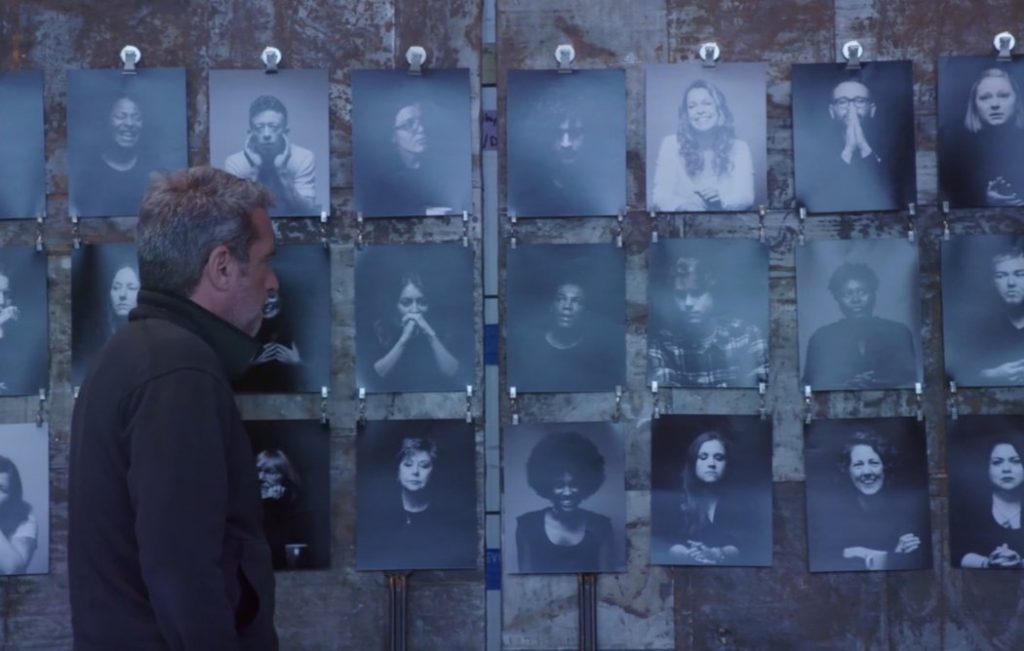
Jason Reid in a scene from Tell My Story. Image Source: The Progressive Magazine

It’s a deeply personal effort.

“The world most parents grew up in no longer exists. Kids today are dealing with COVID-19, climate change, economic instability, police violence, racism, and sexual assault,” Reid says. “When I was fourteen, I didn’t pay attention to the news. Today, kids at ten, eleven, twelve, see a world that sucks, and it can begin to feel that there is nothing to live for.”

“Then they go on Instagram, Twitter, and Facebook and it looks like everyone else’s life is better than theirs,” he adds. “They see hundreds of pictures of beautiful people and start to build up ideas of what their life should be like. When they don’t get as many ‘likes’ on a post as they expect, they can start to feel alone and wonder why they’re on the earth.”

As disturbing as this is, Reid is not trying to change the mindset of, or even influence, these young people. Instead, he is directing his efforts toward parents and caregivers.

Image Source: The Conversation

“Kids need to be loved,” he says, noting that every teenager needs gender-affirming health care, respect, and acceptance from their families, friends, and communities, he says.

“Across the board, mental health problems such as depression, anxiety, and Post Traumatic Stress Disorder put youth at risk for suicidal thoughts or attempts,” according to a report by the American Psychological Association (APA). “But many African (American) children and adolescents face additional challenges, including exposure to violence and racial discrimination that may further increase the risk.”

Worse, the APA found that many Black teens do not have access to mental health services unless they become involved in the juvenile justice system. The group’s recommendations include increasing the availability of affordable, community-based, mental health resources as an essential element of suicide prevention efforts.  


For his part, Reid wants his approach to be largely apolitical, with the onus of responsibility on caregivers. “We have to own our teens’ mental health in the same way as we own their physical health,” he says. “Denial, or calling depression a ‘phase’ or ‘natural teenage moodiness,’ underestimates its seriousness.”

He then lists several more recommendations: “You can give your teen a phone, but you should make sure to restrict the browser. Unfettered access to the entire world at 1 a.m. is too much. Ryan used Google to research how to kill himself, and my wife, his three older siblings, and I were oblivious.”

Equally important, he continues, is that adults need to be more open about their own experiences and vulnerabilities.

“You’re not your teen’s friend, but it is important for them to know that most of us were bullied at some point; even the bullies were bullied,” Reid says. “Ryan saw me as the guy who owned companies, who was successful. I never shared that my life wasn’t always so great.

I never told him that I’ve almost been bankrupt three times, or that thirteen of my businesses have failed. I thought I needed to be a pillar of strength at all times and never told him that things in my life were not always on an upward trajectory of wonderfulness.”

That said, Reid admits that he’s struggled to abandon his role as a “fixer.” 

Since Ryan’s death, he says he’s learned that many people don’t want someone to swoop in and solve their problems.

“We often just need to listen,” he explains.

As Reid speaks, his deeply felt regret is palpable. Nonetheless, he has not allowed his grief to immobilize him.

“On the night Ryan was taken off of life support, I asked myself what I would have liked Ryan to do and the answer was ‘choose life over death,’ ” he says. “So, I paid $10,000 for the Choose Life domain name and only later realized that it sounded like I’d created an anti-abortion organization. Still, I felt that it was the right message to put out, so I kept the name.”

In the thirty-nine months since Ryan’s death, Reid has given countless talks and spoken to hundreds of parents, educators, medical workers, and caregivers. He believes that he has made some headway in increasing public awareness about the mental health concerns of youth.

“Suicide is not the second leading cause of death among ten- to-twenty-four-year-olds because we’re doing something right,” he says in the film, Tell My Story. “Maybe if I’d taken the time to have real conversations with Ryan about how we were really feeling, he would be with us today.”

Article Written by Eleanor J. Bader for The Progressive Magazine

Share:

LinkedIn
Facebook
X
WhatsApp

Board of Trustees

Dr. Waheed Awonuga

Member, Board of Trustees

Waheed Oyetola Awonuga is a trained Medical Doctor with five years of ongoing practice experience, specialising in Family Medicine. He is also an entrepreneur with a knack for developing ideas that are not only bankable but profitable.

Waheed attended Santa Maria Private School in Mushin and Government College Ikorodu. He holds a Diploma in Data Processing from Olabisi Onabanjo University and completed his medical education at the University of Sierra Leone, graduating with MBChB (Medicine and Surgery). He passed the West African College of Physicians Primaries Examination at UCH, Ibadan.

Waheed is an alumnus of the Young Africa Leadership Initiative (YALI), Africa Cohort 2. He owns Infinity Creative Media, a media consultancy firm in Freetown, Sierra Leone, and Infinity Print House, a general print firm also based in Sierra Leone.

Waheed is an avid reader and writer who enjoys travelling and spending time with his family.

Management Team​

Hon. Tobi Olatunji

Executive Director

Hon. Tobi Olatunji serves as Executive Director of Teens Going for Gold Network, providing strategic leadership across TGFGN’s programmes and institutional partnerships.

He oversees programme delivery across all five active states and drives the organisation’s evolution into an institutional peace education body, ensuring that TGFGN’s work remains responsive to the complex social realities facing Nigerian youth today.

Management Team​

Ola Olaoluwa

Co-Founder

Olawumi Olaoluwa is a graduate from the Economics department of the University of Benin, Nigeria. He is also the Creative Director of JOSEL kolektionz, a clothing line.

Vocationally, he is a writer, content developer, actor, and leadership enthusiast. One of the pioneer volunteers of Teens Going for Gold Network, Olawumi has over five years of experience in teen mentoring and coaching. He currently serves as Director of Human Resources.

In his own words: “The opportunity Teens Going for Gold Network presents me with to impact teenagers with qualitative and sustainable education is the main attraction the organisation holds for me.”

Board of Trustees

Dr. Mala Mustapha

Member, Board of Trustees

Dr. Mala Mustapha is an academic and development professional with deep expertise in conflict resolution, peacebuilding, and institutional governance.

His scholarly and practitioner experience spans multiple Nigerian states and regional contexts, providing TGFGN with critical insight into the structural dimensions of peace and security in Northern Nigeria and the Lake Chad Basin region.

Board of Trustees

Idayat Hassan

Chair, Board of Trustees

Idayat Hassan is a leading expert in security, governance, and democracy in West Africa. She serves as the Director of the Centre for Democracy and Development (CDD), one of the region’s foremost policy research and advocacy organisations.

Her work spans election monitoring, conflict prevention, and democratic institution building across Nigeria and the broader West African sub-region. She brings decades of governance expertise to TGFGN’s Board of Trustees.

Management Team​

Godsgift Chayil Obi

DEPUTY DIRECTOR

Godsgift Chayil Obi serves as Deputy Director of Teens Going for Gold Network, supporting organisational management, programme coordination, and operational delivery.

In this role, she works closely with the Executive Director and management team to ensure that TGFGN’s programmes achieve their intended impact across all active states, maintaining the quality and consistency of delivery that has defined the organisation’s 12-year track record.

Board of Trustees

Dele Olomide​

Member, Board of Trustees

‘Dele Olomide currently leads the Human Resources and Admin function of Clarke Energy Nigeria, the largest authorised distributor and service partner for Jenbacher gas engines and a leading brand in the power and utility sector in Nigeria. His interests are Leadership Development, People Development (Coaching and Mentoring), Organisational Development and Change, Strategy and Growth.

‘Dele is an HR professional with approximately 10 years of generalist experience spanning Manufacturing, IT, Gaming and Energy. He is also an Associate Pastor with El-Shaddai Covenant Church, Lagos. Before now, he has worked with two multinationals, three start-ups, and a Secondary School.

He graduated from the University of Ilorin where he studied Mathematics/Statistics and holds an MBA in Marketing Management. He is an Associate Member of the Nigerian Institute of Training and Development and an Associate Member of the Chartered Institute of Personnel Management.

Board of Trustees

Adedolapo Osuntuyi

Member, Board of Trustees

Adedolapo Osuntuyi is a children and education advocate. She is the founder of Dolly Children Foundation, a nonprofit organisation that equips the African Child to adopt twenty-first-century skills through education, capacity building and advocacy programmes.

Inspired by her upbringing, she has a passion for empowering and creating equal opportunities for children from low-income backgrounds. Dolapo has developed organisational strategy and management processes in the Foundation that have impacted over 22,000 children in 25 communities in four states.

Dolapo has over a decade of experience in child protection, early childhood and community development programmes. A graduate of Botany from Lagos State University, she also holds a master’s degree in Child Health and Social Care from the University of Central Lancashire, Preston, United Kingdom.

In 2015, she received an Africa-America Institute Scholarship to study Social Sector Management at the Enterprise Development Centre, Pan-Atlantic University, Nigeria.

Board of Trustees

Adebanke Ilori Oyeniyi

Secretary, Board of Trustees

Adebanke Ilori Oyeniyi is a lawyer and development professional. Her professional experience spans across politics, inclusive governance, and legislative reforms. She serves as the Executive Director of Raising New Voices Initiative and as the Managing Editor of Lawyard, a platform for interactions around the practice of law in Nigeria.

In 2019, Adebanke led New Voices to conduct the national #BreakTheHold campaign providing resources to competent young people under 35 contesting to be members of the Federal House of Representatives. As a woman in politics, she was appointed as the National Publicity Secretary of Kowa Party — making her the youngest female to occupy the position in Nigeria.

As an advocate for social equality, she has championed the right of prison inmates to education in line with the UN Minimum Standard Rules for the Treatment of Prisoners, and has worked for the implementation of laws to promote the rights of children and prevention of violence against persons.

As a Pan African, she has facilitated extensive deliberations at the African Union on the importance of youth integration in the actualisation of Agenda 2063.

Adebanke holds a bachelor’s degree in law from Obafemi Awolowo University, Ile-Ife, a Certificate in Public Management from Bridgewater State University, Massachusetts, and is pursuing her Master’s in International Development and Policy at the University of Chicago. She is a 2019 Mandela Washington Fellow.